Unlocking the Secrets of Nutrition for Optimal Triathlete Performance and Body Composition
nn

Triathletes are some of the most disciplined athletes out there—committed, consistent, and often meticulous about training nutrition. They’ll dial in the perfect pre-workout snack, hit their carb targets during the bike, and recover with a well-timed protein shake.
But what happens outside of training hours?
For many athletes, that’s where the gaps appear—and those gaps can sabotage energy levels, slow recovery, compromise immune function, and stall body composition progress.
Let’s walk through the essentials of fueling during exercise first, and then dive into the real game-changer: how athletes fuel the other 22 hours of the day—and how mindset plays a bigger role than most people realize.
Before, during, and after training, your body’s fuel needs shift based on intensity, duration, and your goals—but the theme is always the same: give your working muscles what they need, when they need it. Before exercise, carbohydrates play the lead role. For short or lower-intensity sessions, a small, quick-digesting carb snack is enough to top off energy. As intensity or duration climbs, so does the need for more substantial carbohydrate intake—whether that’s a moderate dose within the hour before training or a larger pre-exercise meal a few hours out, built around easy-to-digest carbs and kept low in fat and fiber to protect the gut.
Once you’re in the session, fueling becomes all about sustaining energy and maintaining hydration. Short workouts rely on fluids alone, but longer or harder sessions call for steady carbohydrate delivery. As the duration crosses the two-hour mark, the body benefits from higher carb intake along with sodium replacement to support performance and prevent excessive losses through sweat.
After training, the focus shifts to replenishment and repair. Carbohydrates restore the glycogen you used, protein supports muscle recovery, and fluid replacement helps you return to baseline. The immediate recovery window (the first couple of hours) is crucial, but the hours that follow matter just as much—consistent, balanced eating keeps the recovery process moving so you’re ready for the next session.
And this is just the beginning. What you eat outside your training windows—your day-to-day fueling—sets the foundation for energy, performance, and resilience long before you lace up your shoes. Let’s connect this training-focused strategy to what your overall nutrition should look like.
Pre-Workout and Intra-Workout
Timing | Intensity / Duration | Fueling Recommendations |
Pre-Exercise | < 60 minutes (Low–Moderate) | • Light carb snack (15–30 g)• Examples: banana, applesauce, granola bar |
60–90 minutes (Moderate–High) | • 30–60 g carbs in the hour before training | |
> 90 minutes or High Intensity | • 1–4 g/kg carbs 1–4 hours pre-training• Keep fat + fiber low to reduce GI distress | |
Intra-Exercise | < 60 minutes | • Hydration only |
60–150 minutes | • 30–60 g carbs/hour• Hydration as needed | |
150+ minutes | • 60–90 g carbs/hour• 300–600 mg sodium/hour• Fluids based on sweat loss |
The Real Challenge: Fueling Outside the Workout
Even the most disciplined triathlete can unknowingly undermine their training by underfueling between sessions. Layer in common beliefs like “I earned this because I trained today” and nutrition starts to drift away from the athlete’s goals.
Let’s break it down.
Perception vs. Physiology: The “I Earned This Food” Mindset & the Low-Carb, High-Protein Craze
Endurance athletes often fall into nutrition patterns shaped more by diet culture than athletic physiology. Two of the most common are:
“I earned this food” — believing a hard workout justifies high-fat or indulgent meals.
The low-carb, high-protein craze — assuming more protein and fewer carbs will accelerate body composition changes.
Examples of How These Mindsets Show Up
Finishing a long run and choosing a high-fat breakfast because you “deserve it.”
Eating excessive protein with the belief that it speeds fat loss or muscle gain.
Justifying indulgent or oversized meals because training “burned it off.”
There is absolutely room for enjoyment and flexibility in any athlete’s diet. But here’s where perception and physiology diverge.
Training Makes You More Efficient — Not a Calorie-Burning Machine
As athletes become fitter and more experienced, their bodies use energy more efficiently. That means:
Fewer calories burned at the same pace
More efficient neuromuscular firing patterns
Lower metabolic strain during identical sessions
So the belief “I trained hard, so I need a huge meal” becomes less accurate as fitness increases. This does not mean athletes should restrict food.It means that fueling needs shift from eating more to eating smarter — prioritizing nutrients that support performance, not diet-industry ideals.
Why Protein & High-Fat Foods Aren’t Always the Answer
Protein is essential for:
muscle repair
training adaptation
body composition
recovery
But more is not better, and it definitely does not replace carbohydrates.
Many endurance athletes unintentionally fall into diet-culture habits, leading them to:
Overestimate protein requirements
Undereat carbohydrates
Compensate with high-fat foods because they feel “earned”
Forget that protein cannot replace glycogen
When carbs drop and protein/fat rise, athletes often experience:
Lower training quality
Reduced energy availability
Hormonal downregulation
Difficulty losing body fat
Inefficient lean-mass gains
Stagnant performance
The Athletic Reality
Protein: should be consistent, not excessive
Fat: should be supportive, not compensatory
Carbohydrates: should be timed and prioritized, not minimized
Endurance performance depends on balanced, evidence-based fueling, not reward-based eating or weight-loss trends.
As Athletes Get Fitter, Quality Matters More Than Quantity
A beginner might burn around 800 calories on a long run, while a trained triathlete doing the exact same run may burn far fewer—and that difference is efficiency. As the engine becomes more efficient, the body often needs fewer calories than athletes assume, and the focus naturally shifts toward micronutrients, antioxidants, fiber, and variety. In this stage, it’s the quality of fueling—not just the quantity—that becomes the true driver of performance.
So rather than asking: “How many calories did I burn?”A better question is: “What nutrients does my body need to adapt and perform?”
This mindset elevates consistent energy, recovery, immune health, and body composition.
Practical Framework: Eating for the Work Required
A practical framework for athletes is to “eat for the work required,” meaning your fueling should match the physical demands of your day rather than relying on guesswork or rigid rules. One simple but powerful habit is avoiding long 3–4 hour gaps without food, which helps prevent mid-day energy crashes, irritability, and the kind of overeating that often happens when hunger has built up too long. To make fueling both balanced and sustainable, the 3 + 1 Method provides an easy structure for every meal: include a carbohydrate for energy, a protein for repair, a color source (like fruits or vegetables) for micronutrients and antioxidants, and a performance fat to support satiety and hormone health. When athletes consistently build meals this way, they naturally support training quality, recovery, and long-term progress.
Use the Athlete Plate Method (Nutrition | USOPC)

A moderate day may be one where you train twice but focus on technical skill in one workout and on endurance in the other. The moderate day should be your baseline from where you adjust your plate down (easy) or up (hard/race day).
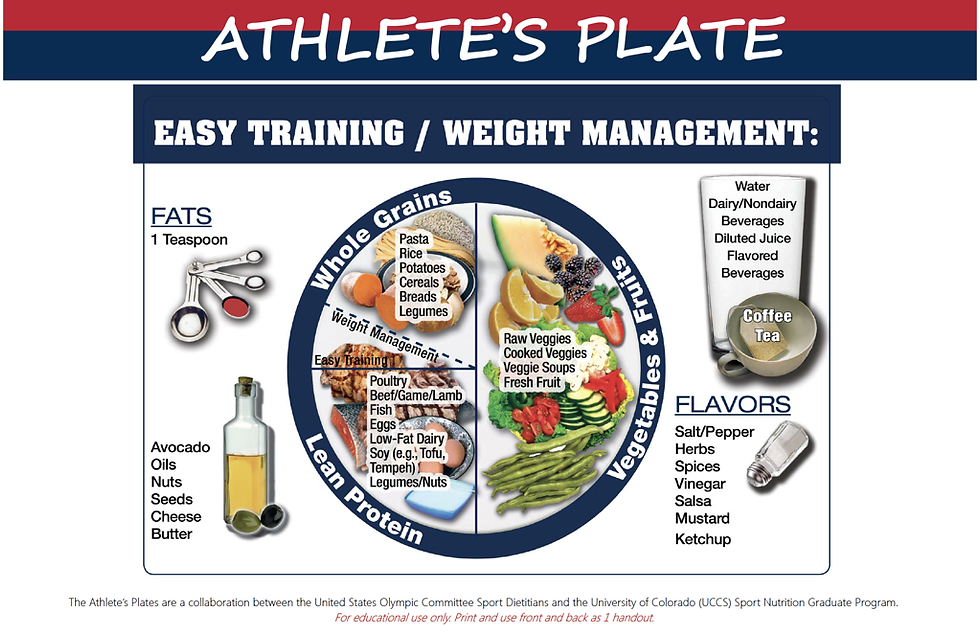
An easy day may contain just a workout or tapering without the need to load up for competition with energy and nutrients. Easy day meals may also apply to athletes trying to lose weight* and athletes in sports requiring less energy (calories) due to the nature of the sport – but not applicable in triathlon, one of the most demanding energy sports.
*Goals for weight loss should be advised with appropriate caloric levels to support basal metabolic needs + energy expenditure to maintain homeostasis and daily function in the energy production needs. The goal is to create a moderate caloric deficit that promotes fat loss without compromising metabolic function, lean mass, or clinical stability.

A hard day contains at least 2 workouts that are relatively hard or competition. If your competition requires fuel from carbohydrates, use this plate to load up in the days before, throughout, and after the event day.
Notice the adjusted carbs and fats based on training load. Nutrients with colorful foods stay high.
Snack with Intention
For endurance athletes, snacks aren’t random add-ons—they’re strategic tools that support performance, recovery, and hormonal stability throughout the day. Intentional snacking is especially important after morning training, when your body is primed to replenish glycogen and repair muscle. A well-timed snack here jump-starts recovery and prevents the mid-morning crash that can derail energy and focus. Snacking intentionally before evening sessions ensures you arrive at training fueled rather than depleted, which protects intensity, form, and overall training quality. And the mid-afternoon snack serves as a bridge during one of the most common low-energy windows of the day. When planned with purpose—not just convenience—snacks help stabilize blood sugar, curb overeating later, and keep your training rhythm strong.
Key Reminders
Athletes benefit from remembering that as fitness improves, nutrient quality becomes more important than simply counting calories. Body composition changes happen outside of training, making recovery and daily habits just as crucial as workouts themselves. Protein is essential for performance and repair, but more isn’t always better—balance matters. High-fat foods aren’t “earned”; they’re strategic tools to support training, not trophies. And perhaps most importantly, fuel today for how you want to feel and perform tomorrow.
Final Thoughts
As your efficiency grows, so does your opportunity to elevate your approach:
From simply counting calories → to fueling your body with purpose and precision
From seeing food as something to earn → to using it as a tool to support performance
From restriction and limitation → to consistent, confident, and sustainable fueling
Triathletes are already disciplined and driven—but true performance and long-term body composition aren’t shaped by a single workout or meal. They’re built through the choices made across the entire day.
What happens between sessions matters just as much as the training itself.
When you shift your focus from what your body “deserves” to what it needs, everything changes. Energy stabilizes. Recovery improves. Adaptation accelerates.
By prioritizing consistent fueling, balanced meals, and getting off the low-energy roller coaster, you create the environment your body needs to actually absorb the training—and unlock the progress you’ve been working for.
Ready to stop guessing and start fueling with purpose?
At NVDM Coaching, we don’t just build training plans—we help you align your fueling with the work required so you can train stronger, recover faster, and see real progress in your performance and body composition.

