IRONMAN 70.3 Coeur d'Alene Race Guide: Course Maps, Elevation, Nutrition & Race Execution


IRONMAN 70.3 Coeur d'Alene at a Glance
Few races on the IRONMAN 70.3 calendar combine natural beauty and race-day challenge quite like Coeur d'Alene. Nestled in northern Idaho along the shores of Lake Coeur d'Alene, athletes are treated to crystal-clear water, rolling terrain, and spectacular lake views throughout the day.
While the course is not considered one of the hardest 70.3 races in North America, it is far from a "free speed" course. The bike features over 3,400 feet of climbing, and the rolling run course rewards athletes who manage their effort wisely early in the race.
Success in Coeur d'Alene comes from patience, smart pacing, disciplined fueling, and respecting the terrain.
Course Overview
Swim
1.2 miles
Single-loop course
Rolling start
Lake Coeur d'Alene
Typically wetsuit legal conditions
Bike
56 miles
One-loop course
Approximately 3,445 feet of elevation gain
Rolling terrain with several sustained climbs
Fast sections mixed with technical pacing demands
Run
Half marathon
Two-lap format
Rolling terrain
Excellent spectator support
Exposed sections can become warm during the afternoon
Swim Course Breakdown
The Coeur d'Alene swim is one of the more straightforward swims on the IRONMAN 70.3 circuit.
Athletes start from Coeur d'Alene City Beach and complete a single rectangular loop in Lake Coeur d'Alene before exiting adjacent to transition. The race utilizes a rolling swim start, meaning athletes seed themselves according to expected swim time.
Key Challenges
Cold Water Shock
Even in June, water temperatures can be cool enough to create elevated breathing rates during the first few minutes.
Athletes should:
Enter the water before the start if possible
Focus on controlled exhalation
Avoid sprinting the first 200 meters
Straight-Line Swimming Matters
The course is relatively simple, making navigation an opportunity to save energy.
Every unnecessary zig-zag adds distance and time.
Execution Strategy
Strong swimmers:
Settle into race pace quickly
Avoid early surges
Focus on efficiency
Middle-of-pack swimmers:
Prioritize clean water
Stay relaxed through the first 500 meters
First-time athletes:
Focus entirely on rhythm and breathing
Ignore pace until fully settled

Bike Course Breakdown
The bike course is where Coeur d'Alene begins to separate athletes.
With approximately 3,445 feet of climbing over 56 miles, this is not a course that rewards aggressive riding.
The First 15 Miles
Athletes leave downtown and follow Lake Coeur d'Alene Drive.
The terrain rolls consistently and offers incredible lake views.
This section creates a major trap.
Many athletes feel great coming out of the water and push too hard.
Your goal:
Keep heart rate controlled
Let other athletes go
Your race will not be won here.
Middle Section: The US-95 Climb

The longest sustained climbing section occurs after athletes enter US-95.
This segment gradually climbs toward the turnaround before returning toward town.
Key principles:
Ride the Hills with Discipline
Allow power to rise slightly on climbs but avoid spikes.
Recommended:
95-105% of target race power on climbs
Return to target power immediately over the crest
Avoid:
Chasing other athletes
Riding constantly at a threshold effort
The Return to Town
Many athletes mistakenly increase effort on the return leg because they sense the run approaching.
The final 10 miles should feel controlled and sustainable.
If you're questioning whether you're riding hard enough, you're probably pacing correctly.

Bike Nutrition Strategy
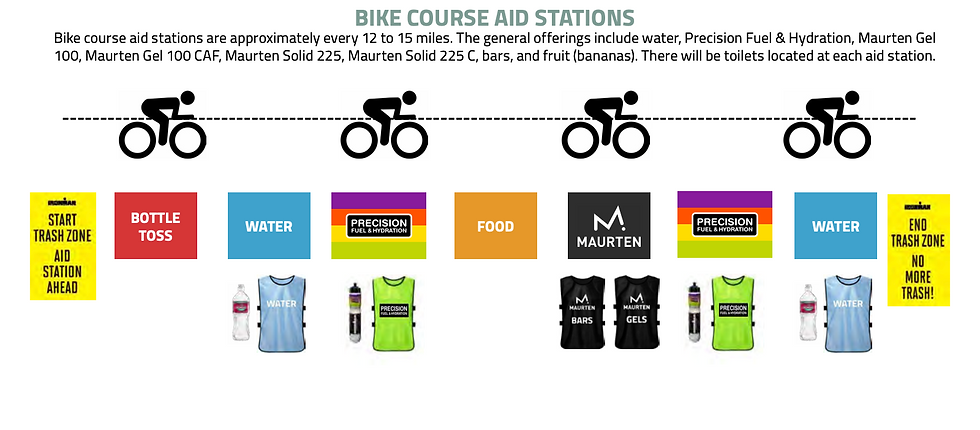
Aid stations appear approximately every 12-15 miles and provide:
Water
Precision Fuel & Hydration
Maurten Gel 100
Maurten Gel CAF
Maurten Solid products
Bananas
Recommended Targets
Most athletes:
75-100+ g carbohydrate/hour
500-1500+ mg sodium/hour
20-30 oz fluid/hour
The bike should account for the majority of race fueling.
Run Course Breakdown
The run course is where smart pacing gets rewarded.
The course uses a multi-lap format around Coeur d'Alene with rolling terrain that prevents athletes from locking into a perfectly steady pace.

Miles 1-3
This section feels deceptively easy.
Target:
First mile should feel smooth without worrying about goal pace
Settle gradually into race rhythm
Miles 4-10
This is where the race truly begins.
Successful athletes:
Maintain steady effort
Continue fueling
Stay ahead on hydration
Athletes who biked too aggressively begin paying for those decisions here.
Miles 10-13.1
The final 5K becomes a competition of fatigue resistance.
At this point:
Form matters
Nutrition matters
Pacing decisions from earlier in the day matter
If you've managed the bike correctly, you'll still be passing athletes during the final miles.

Run Nutrition Strategy
Aid stations appear approximately every mile and include:
Water
Precision Fuel & Hydration
Cola
Maurten gels
Bananas
Oranges
Pretzels
Chips
Recommended Targets
Most athletes:
50-80+ g carbohydrate/hour
Consistent sodium intake
Fluids based on temperature and sweat rate
Never wait until you feel depleted.
Fuel proactively.

NVDM Coaching Race Execution Plan
Swim
Goal: Calm, controlled, efficient
Start conservatively
Focus on breathing rhythm
Swim straight
Bike
Goal: Ride within yourself
First hour: restraint
Middle section: steady climbing execution
Final hour: prepare for the run
Target:
78-85% FTP for most athletes
VI under 1.08
Run
Goal: Negative split effort
Conservative first 3 miles
Build gradually through halfway
Compete during the final 5K
If you're feeling great at mile 3, stay patient.
If you're feeling great at mile 10, start racing.
Final Thoughts
IRONMAN 70.3 Coeur d'Alene rewards athletes who race with patience. The swim is straightforward, the bike is honest, and the run exposes every pacing mistake made earlier in the day.
Athletes who respect the rolling terrain, execute a disciplined fueling strategy, and resist the urge to chase early speed often find themselves having their strongest miles when it matters most.
Race the first half with control.
Race the second half with confidence.
That's how strong performances happen in Coeur d'Alene.
Preparing for your next IRONMAN 70.3?
Success in long-course racing isn't just about fitness—it's about executing the right training, pacing, fueling, and recovery strategies consistently over months of preparation. Whether you're chasing a personal best, a podium finish, or your first finish line, having a structured plan can make all the difference.