IRONMAN 70.3 Happy Valley Race Guide: Course Maps, Elevation, Nutrition & Race Execution


IRONMAN 70.3 Pennsylvania Happy Valley has quickly become one of the most unique races on the North American calendar. Hosted in central Pennsylvania and serving as the 2026 IRONMAN 70.3 North American Championship, the event combines a calm reservoir swim, a challenging Appalachian bike course, and a memorable run through the heart of Penn State University before finishing beside Beaver Stadium.
For athletes chasing a PR, a World Championship slot, or their first 70.3 finish, success at Happy Valley comes down to smart execution. This guide covers everything you need to know about the course, race weekend logistics, nutrition, pacing, transitions, and race-day strategy.
Race Overview
Date: June 14, 2026
Locations
Swim & Transition 1Bald Eagle State Park
Transition 2, Run Course & FinishBeaver Stadium / Penn State University
Race Cut-Offs
Swim: 1 hour 10 minutes
Bike: 5 hours 30 minutes cumulative
Overall Race: 8 hours 30 minutes
Athletes should also be aware of intermediate bike and run cutoffs throughout the day.
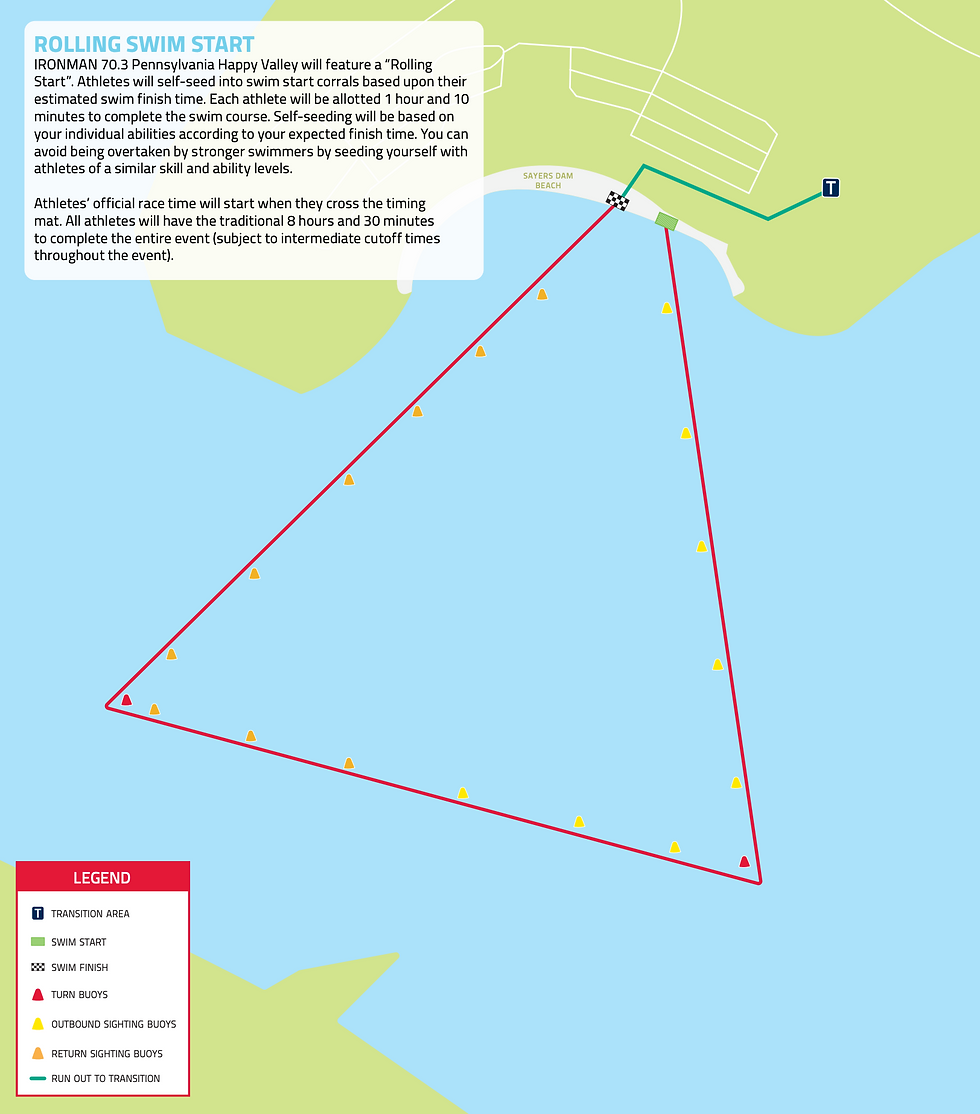
Swim Course Breakdown (1.2 Miles)
The swim takes place in Foster Joseph Sayers Reservoir at Bald Eagle State Park.
Athletes will complete a single-loop triangular course utilizing a rolling swim start format.
Competitors self-seed according to expected swim time and begin individually as they cross the timing mat.
Why Athletes Love This Swim
According to race organizers, athletes voted the Happy Valley swim as one of the top IRONMAN 70.3 swims globally thanks to its calm conditions and scenic surroundings.
Coaching Notes
The biggest mistake many athletes make is treating the swim like a sprint.
Focus on:
Controlled breathing
Smooth rhythm
Consistent sighting
Staying relaxed through the opening 300-500 meters
Your goal is to exit the water ready to ride—not exhausted before the day truly begins.
Transition Strategy: Navigating T1 and T2
Happy Valley uses a split-transition setup.
Transition 1 (T1) is located at Bald Eagle State Park.
Transition 2 (T2) is located near Beaver Stadium in State College.
Athletes must check their Run Gear Bag into T2 on Saturday and will not have access to it on race morning.
Transition 1 (Swim to Bike)
Your Bike Gear Bag should include:
Helmet
Cycling shoes
Sunglasses
Nutrition
Socks (if used)
Arm warmers if weather requires
One unique race rule: cycling shoes must be placed inside your Bike Gear Bag and cannot be left clipped into your bike before the race.
NVDM Coaching Tip
Don't rush T1.
An extra 10-15 seconds to organize yourself can save minutes later on the bike.
Transition 2 (Bike to Run)
Your Run Gear Bag should include:
Running shoes
Race belt
Hat or visor
Nutrition
Salt capsules
Extra sunscreen
Double-check your bag Saturday because you will not have access to T2 race morning.
NVDM Coaching Tip
The first mile of the run should feel controlled.
Many athletes lose more time by starting too fast out of T2 than they gain by rushing through transition.
Bike Course Breakdown (56 Miles)
The bike course is what makes Happy Valley famous.
After leaving Bald Eagle State Park, athletes travel through central Pennsylvania farmland, rolling valleys, and Appalachian terrain before returning to State College. Race organizers describe the route as traversing "rolling valleys and over the scenic Appalachian Mountains."
This is not a course where you can simply lock into one power number and ride.
Terrain management becomes critical.
Happy Valley Elevation Profile Analysis
While Happy Valley doesn't feature one iconic mountain climb, the course is relentlessly honest.

The challenge comes from:
Continuous rollers
Repeated climbing efforts
Variable terrain
Accumulated fatigue
Many athletes underestimate the cost of repeatedly surging above threshold on short climbs.
What This Means For Your Race
Athletes who run well generally:
Stay patient early
Keep climbing efforts controlled
Avoid chasing competitors uphill
Fuel consistently throughout the ride
The athletes posting the fastest bike splits are not always the athletes posting the fastest overall race times.
NVDM Coaching Recommendation
Ride the first 20-25 miles conservatively.
If you feel like you're holding back early, you're probably pacing correctly.
Remember: the bike course creates fatigue. The run course reveals it.
Recommended Gearing for Happy Valley
One of the most common mistakes athletes make is arriving with gearing designed for flat courses.
Recommended Cassette Options
Most age-group athletes should consider:
11-30
11-32
11-34
depending on fitness level and drivetrain setup.
Chainring Recommendations
Triathlon Bike
52/36
50/34
Road Bike
Compact gearing (50/34)
The Biggest Gearing Mistake
Grinding climbs at low cadence.
Maintaining a comfortable cadence preserves muscular endurance and can dramatically improve your run performance.
Having one easier gear available is usually better than wishing you had one later.

Bike Aid Stations & Nutrition
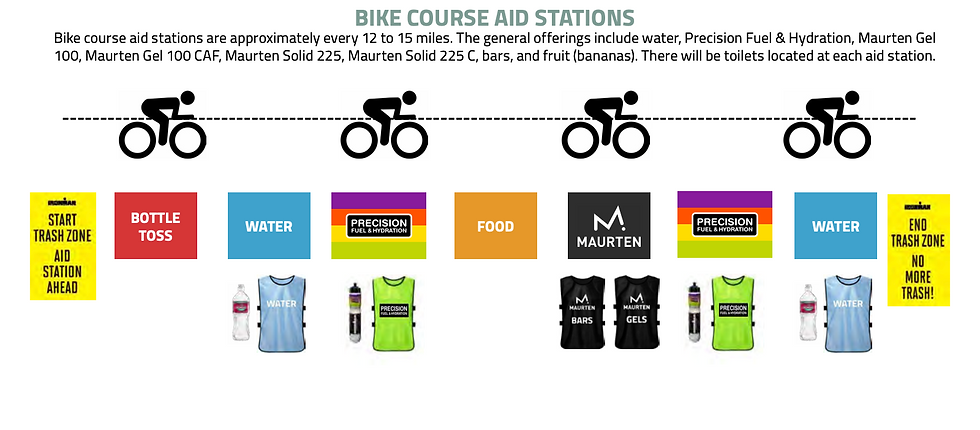
Bike aid stations are located approximately every 12-15 miles.
Available nutrition includes:
Water
Precision Fuel & Hydration
Maurten Gel 100
Maurten Gel 100 CAF
Maurten Solid products
Bananas
NVDM Nutrition Strategy
Start fueling within the first 15 minutes of the bike.
The strongest runners typically begin the run with fueling already under control.
Run Course Breakdown (13.1 Miles)
The run course showcases some of Penn State's most iconic landmarks.

Athletes will pass:
Beaver Stadium
Penn State Creamery
Nittany Lion Shrine
Old Main
Historic portions of campus
before finishing beside Beaver Stadium.
Few IRONMAN 70.3 races offer a more memorable finish environment.

Run Execution Strategy
The run is where Happy Valley rewards patience.
First 3 Miles
Focus on:
Settling heart rate
Hydrating
Finding rhythm
Miles 4-10
Stay disciplined.
Monitor effort rather than pace.
Final 5K
If you've paced correctly, this is where you can really dig in.
Many athletes lose 10-15 minutes on the run simply because they overbike the first half of the day.
Run Aid Stations
Aid stations appear approximately every mile and include:
Water
Precision Fuel & Hydration
Cola
Maurten products
Pretzels
Chips
Bananas
Oranges
Use aid stations proactively rather than reactively.

Best Places for Spectators
One of the biggest advantages of Happy Valley is its spectator-friendly layout.
Swim Start
Bald Eagle State Park offers excellent visibility and a great atmosphere for watching athletes begin the race.
Transition 2 & Finish Area
The best all-day location for spectators.
Family and friends can:
Watch athletes enter T2
See multiple points of the run course
Experience the finish line atmosphere
Explore the IRONMAN Village
Penn State Campus
Great viewing opportunities include:
Beaver Stadium
Nittany Lion Shrine
Old Main
Penn State Creamer
These locations often allow spectators to see athletes multiple times.
The Finish Line
If your supporters only choose one location all day, choose the finish line.
The atmosphere beside Beaver Stadium builds throughout the day and creates one of the best finish experiences in North American triathlon.
Race Week Logistics
Athlete Check-In
Friday: 2:00 PM – 7:00 PM
Saturday: 9:00 AM – 4:00 PM
There is NO race-day athlete check-in.
Bike Check-In
Mandatory Saturday: 9:00 AM – 5:00 PM
All bikes must remain overnight in transition.
Race Morning
Transition Opens: 5:00 AM
Age Group Start: 7:05 AM
Athlete Shuttles: 4:00 AM – 6:00 AM
Athletes should have transportation and parking plans finalized before race morning.
Three Biggest Mistakes Athletes Make at Happy Valley
1. Riding the Early Climbs Too Hard
The course rewards patience.
2. Underfueling the Bike
Terrain often distracts athletes from their nutrition plan.
3. Starting the Run at Goal Pace
Your first mile should feel easy.
If it feels fast, it's probably too fast.
Final Thoughts
IRONMAN 70.3 Happy Valley is a championship-caliber race that rewards disciplined athletes.
The swim is calm and fast. The bike course is challenging and demands respect. The run delivers one of the most memorable finishes in the sport.
Stay patient on the bike, fuel consistently, execute smooth transitions, and trust your training.
Do that, and you'll give yourself the best opportunity to have a successful day in Happy Valley.
Anything is Possible.
Ready to race your best at Ironman 70.3 Happy Valley?
Success on race day isn't about finding fitness in the final week—it's about executing the plan you've built over months of training. Trust your preparation, stay patient early, and focus on making smart decisions from the swim start to the finish line.
If you're looking for personalized guidance to help you race stronger, recover faster, and reach your full potential at your next 70.3, NVDM Coaching is here to help. Whether you're chasing a PR, a podium, or simply your strongest finish yet, we'll build a training strategy tailored to your goals, experience, and lifestyle.