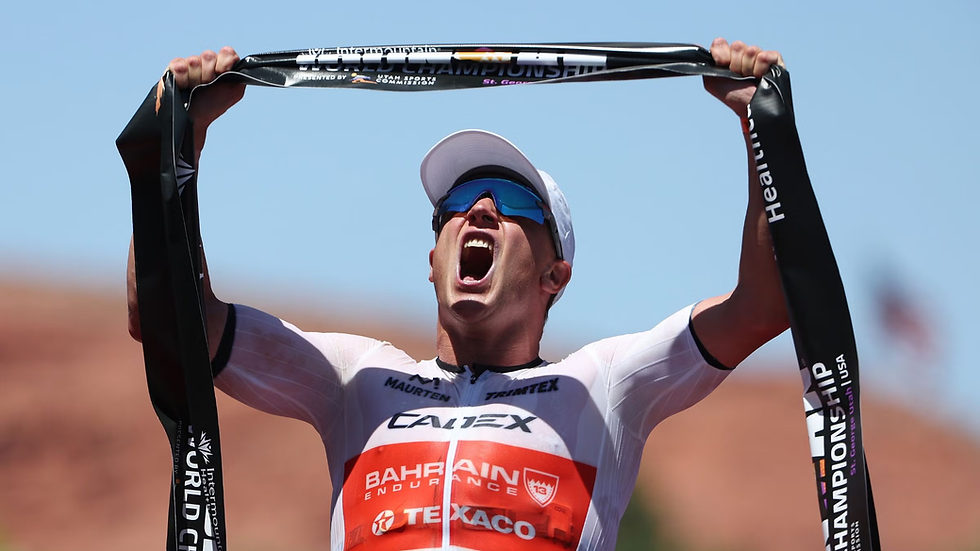
Inside Kona Race Week: The Traditions That Make the IRONMAN World Championship


On Saturday morning a cannon will fire over Kailua Bay, and 2,548 athletes from 85 countries will start the IRONMAN World Championship. The pro men go first, at 6:20 a.m., and the pro women follow ten minutes later. For the first time since 2019, both pro races share one day in Kona.
Saturday is what gets broadcast. Most of what people love about Kona happens in the days before it, along a few blocks of Aliʻi Drive and a few hundred yards of water off the Kailua Pier. Kona race week has traditions that started as jokes, routines that turned into institutions, and a finish line that gets louder as the night goes on. I'm writing three pieces on Kona this week. This first one is about the culture of race week and where it came from. (If you want the race's history from 1978 forward, we covered that in our Kona history and viewing guide.)
Kona Race Week, Sunday to Thursday
Kona race week starts in the water. This past Sunday, the Hoʻāla Training Swim sent a sold-out field into Kailua Bay. It was cut to 1,900 meters this year because of a jellyfish forecast. Last year about 800 people swam it, and Lucy Charles-Barclay won the pro women's race in 36:30, which tells you how seriously some people take a training swim.
After that, mornings belong to the pier. The small beach next to the pier is part of Kamakahonu, where Kamehameha I lived during the last years of his life, and the restored ʻAhuʻena Heiau stands at the water's edge. In the triathlon world it goes by Dig Me Beach, a name it earned from the amount of posing that happens there during race week. World champions and first-time qualifiers wade in from the same strip of sand every morning, all of them in their race-week best, all of them pretending not to look at each other.
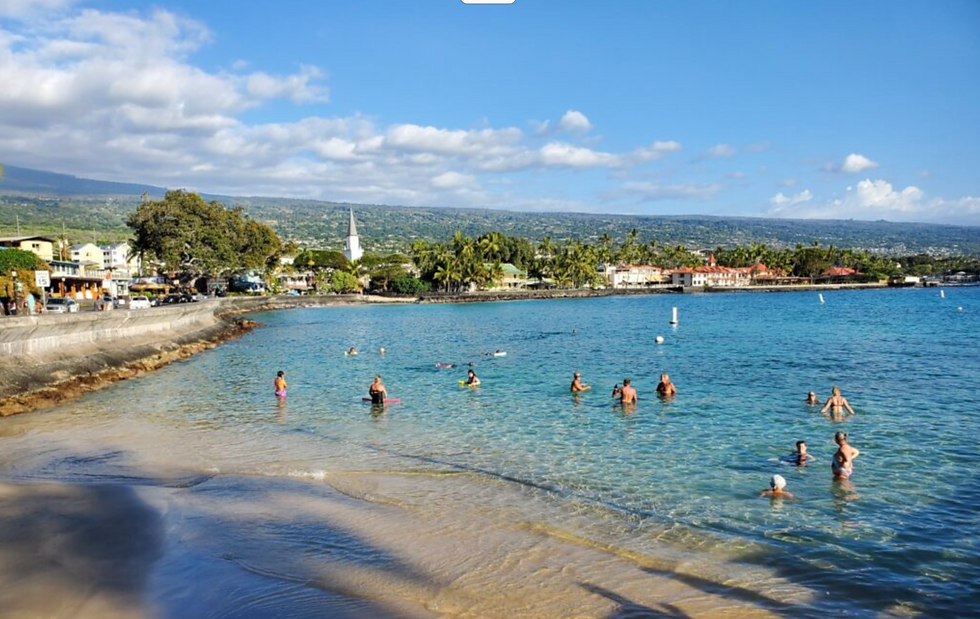
Swim a few hundred yards out and you'll find a coffee boat anchored in the bay, serving espresso to people treading water. Operators have changed over the years, and the boat has been part of race week for well over a decade. Last year the spinner dolphins showed up for one of the morning swims, and Slowtwitch reported that they "stole the show."
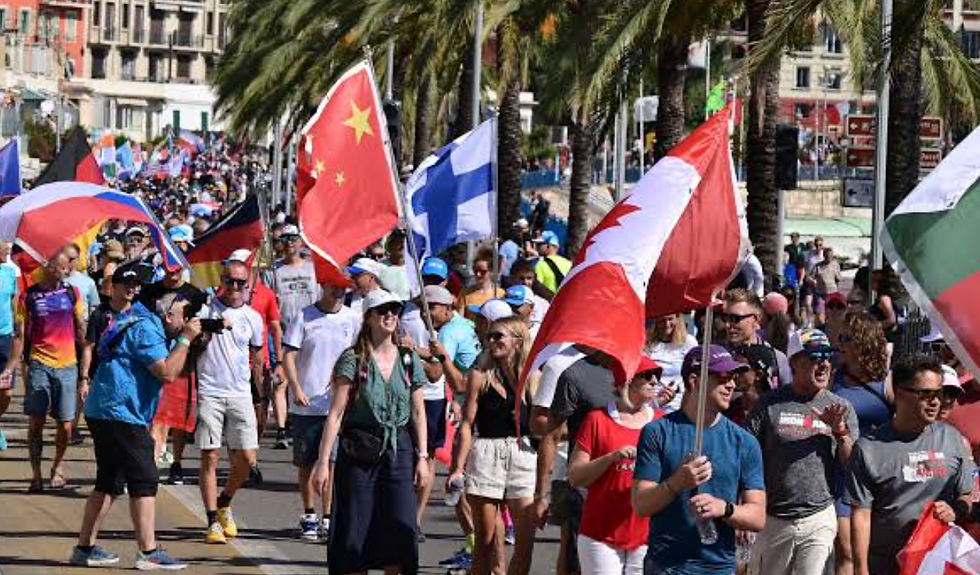
Tuesday evening is the Parade of Nations. Athletes walk down Aliʻi Drive behind their country's flag to Hale Hālāwai, and the crowd shouts the country names back at them. In 2024, with 85 countries, regions and territories represented, a Kona resident told Big Island Now it was "Kona's own version of the Olympics." This year's field again comes from 85 countries. For a lot of athletes, it's the first time they see how many people traveled how far for the same race.
Thursday morning brings the event everyone remembers. The Underpants Run started in the late 1990s as a joke by Paul Huddle and two friends, Chris Danahy and Tim Morris. Huddle and Roch Frey, a longtime organizer, still don't agree on whether the first one was in 1997 or 1998. The target was a race-week habit that bothered the people who live in Kona. As Frey explained in 2014, "Over the years, locals would get put off by athletes going to the grocery store and to dinner in their Speedos during race week." So they organized a run down Aliʻi Drive in underwear and made the point by exaggerating it.
The joke stuck. The Underpants Run is now an IRONMAN Foundation fundraiser that has raised more than $400,000 for the Kona community. This year it starts at 7:15 a.m. on Thursday: a short out-and-back on Aliʻi Drive, with a $35 donation to enter. Last year Julie Moss, Andrea Fisher and Michellie Jones led it. I love this one. It takes a group of very serious people, two days before the biggest race of their lives, and gets them laughing at themselves in public.
Saturday, From the Cannon to Midnight
Race morning starts with a cannon. West Hawaii Today once described the moment as "the blast of a cannon and roar of cheers from the crowd lining the sea wall." The swim heads out to a turnaround boat about 1.2 miles off the pier and back, and by the time the leaders are on their bikes the crowd has moved up to Hot Corner, where Palani Road meets Kuakini Highway.
None of it works without volunteers. In a normal year, around 6,000 people volunteer, starting about two weeks before the race. In 2018, West Hawaii Today counted about 190 different volunteer jobs, with 800 to 900 volunteers coming from outside the U.S. and close to 1,000 working the finish line alone. Some of them have done it for decades. That same story found Bill Stockton working his station for the 36th year. Franz Weber, who led the volunteer program for many years and died in 2025, summed up why people keep coming back: "It's really the aloha spirit."

By late afternoon the champions are done, and for my money that's when the best part of the day starts.
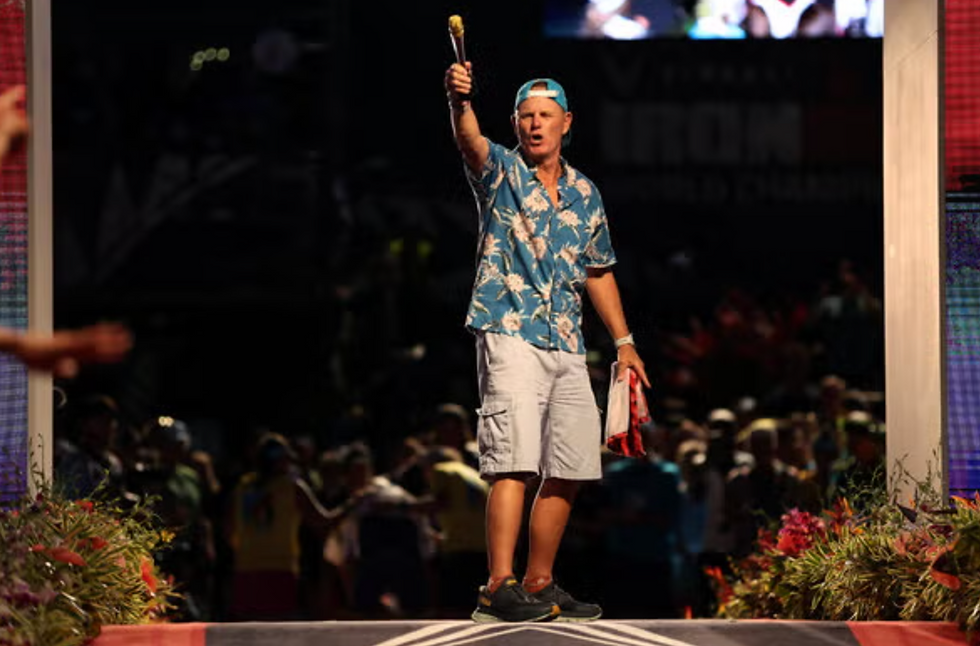
The overall cutoff is 17 hours, which brings the last finishers down Aliʻi Drive close to midnight, and the crowd grows as the night goes on. At the 2014 race, West Hawaii Today reported that the 60-plus athletes who finished in the final hour got "a roar that equaled even the greeting the champions got." Both of that year's champions, Sebastian Kienle and Mirinda Carfrae, were there dancing, and the crowd counted down to midnight. One of the late finishers was the island's own mayor, Billy Kenoi, in 16:54:13.
Mike Reilly, the longtime voice of the race, first called the Kona finish line in 1989. He started telling finishers "You are an IRONMAN" in 1991, for a friend crossing the line, and kept saying it because of how the crowd reacted. In 2015 he put the late-night crowd plainly: "The people coming in around 16 hours usually draw a louder cheer than the pros." Reilly called his last Kona in 2022. That same year, Chelsea Sodaro, the women's champion, was among the people at the line when Chris Nikic finished in 16:31:27, the first athlete with Down syndrome to finish the IRONMAN World Championship.
A Race the Town Wanted Back Together
Kona is a small town hosting a very large event, and the relationship takes care. When the 2022 championship was spread over two race days to fit a bigger field, some residents pushed back. One of them, Marty Richardson, told Big Island Now, "In the Hawaiian culture, you need to ask permission. I just don't feel I was [ever] appropriately asked." Later that year, IRONMAN and Hawaiʻi County said two race days were "not currently in the best interest of the local community."
From 2023 through 2025, the championship was split between Kona and Nice, France, with the men and women taking turns in Hawaii. In April 2025, IRONMAN announced that both would return to Kona on a single day starting in 2026. Hawaiʻi County Mayor Kimo Alameda said the decision "honors the wishes of the Kona community and athletes." Saturday is the first race under that plan, and the race turns 50 in 2028.
I think that history explains why the culture holds up. The traditions people treasure in Kona grew out of athletes and locals sharing a town for a week: a joke run, a coffee boat, volunteers who come back for 36 years, a crowd that stays until midnight. They last because the town is part of them.

Planning Your Own Kona Race Week
If you're working toward a Kona slot, plan for the whole week. Get there early enough to adjust to the heat and the time change (A later piece in this series covers the course and the climate). Then decide ahead of time which traditions you'll join and how. Swim the Hoʻāla at an easy effort. Jog the Underpants Run. Keep any group rides on the Queen K short, because your taper should look the same in Hawaii as it did at home. You can enjoy all of it and still arrive at the pier on Saturday fresh.
If you're a season or two away, the path usually starts with a first full and a well-chosen qualifying race. Our guides on moving up from 70.3 to a full IRONMAN and building your 2027 race schedule are good places to start. And whether you're racing or watching, if you ever find yourself on Aliʻi Drive at 11 p.m. on race night, stay for the last hour.
If Kona is somewhere on your list, we would love to help you get there. Set up a call with us now, and we will help you be ready for your best race day!