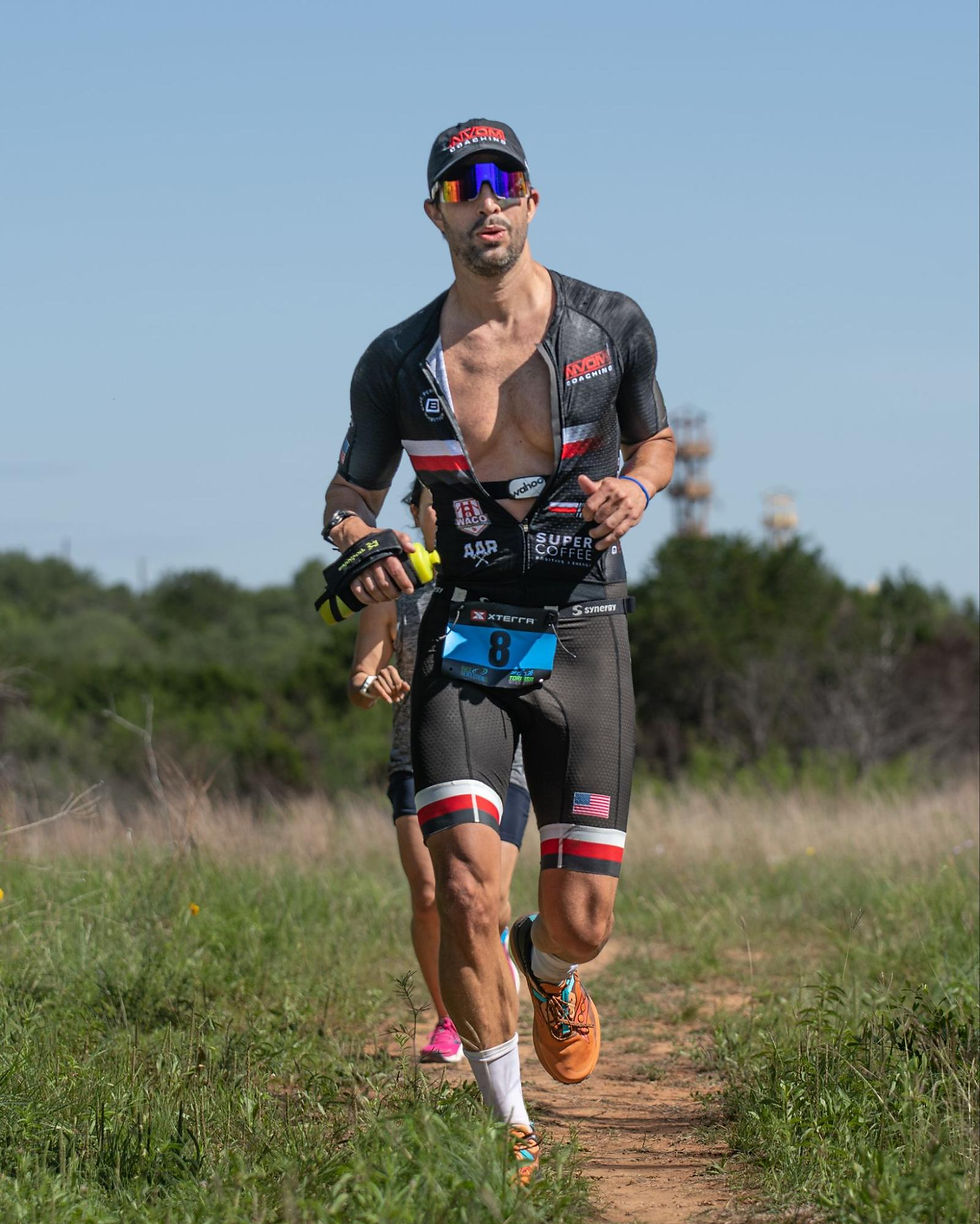
The Hero’s Mindset: How Endurance Athletes Build Mental Strength, Faith, and Resilience

Why Mindset Is the Ultimate Endurance Advantage
At some point in every race—whether it’s an Ironman, marathon, or long training day—your body will ask you to stop.
Your legs fatigue.Your plan starts to unravel.And your mind begins negotiating an easier way out.
This is the moment that defines endurance athletes.
Not talent. Not fitness. But mindset.
The Science Behind Belief and Performance
The idea that “the mind leads the body” isn’t just motivational—it’s backed by research.
The psychobiological model of endurance performance (Marcora et al.) shows that:

Perception of effort—not just physiology—limits performance
Belief and motivation directly influence how hard effort feels
Athletes with stronger mental framing sustain effort longer
Neuroscience supports this further:
Positive expectancy increases activation in motivation-related brain regions
Cognitive framing can reduce perceived fatigue
Attention control improves endurance efficiency
Translation for athletes: If you train your mind, you literally expand your performance ceiling.
Triathlon as a Mental Training Ground
Triathlon uniquely exposes every layer of your mindset. It’s not just physical—it’s psychological, emotional, and often spiritual.
The Swim: Trust the Process
Open water strips away control.
You can’t see clearly. You can’t always find rhythm.
This is where trust becomes your anchor:
Trust your preparation
Trust your breath
Trust your ability to adapt
The Bike: Practice Presence and Control

The bike is where doubt gets loud.
Hours alone. Wind. Hills. Fatigue.
This is where process focus wins:
Cadence
Nutrition timing
Breathing
Position
Research in sports psychology shows that task-focused attention reduces perceived effort and mental fatigue.
This is the discipline of coming back to the present—again and again.
The Run: Where Identity Is Revealed
The run doesn’t build character—it reveals it.
This is where:
Gratitude replaces frustration
Faith replaces doubt
Identity replaces ego
Many endurance athletes describe this phase as deeply meaningful—not because it’s easy, but because it’s honest.
Faith, Meaning, and Performance

Faith—whether spiritual or personal—provides:
Meaning to suffering
Perspective beyond the moment
Stability during uncertainty
This isn’t abstract—it’s practical.
Athletes who connect effort to purpose are more resilient, more consistent, and more fulfilled in the long term.
How to Build a Resilient Endurance Mindset (Practical Framework)
1. Identity Drives Performance
Instead of focusing only on outcomes, define who you are becoming:
“I stay calm under pressure.”
“I finish what I start.”
“I am consistent and resilient.”
Coaching cue: When things get hard, ask: “What would this version of me do right now?”
2. Process Creates Confidence

Daily actions build belief.
Examples:
Follow your training plan
Practice visualization (5 minutes/day)
Use a mantra during sessions
Track one gratitude point post-workout
Confidence is not built on race day—it’s built in repetition.
3. Reframe Discomfort
Instead of resisting difficulty, redefine it:
“This is where I grow.”
“This is part of the process.”
“I’m becoming stronger because of this.”
This doesn’t reduce effort—but it changes your relationship to it.
4. Use If–Then Mental Scripts
Pre-plan your responses:
If I feel overwhelmed → focus on the next minute
If negative thoughts appear → repeat identity statement
If fatigue spikes → reset breathing and posture
This turns resilience into a trained skill, not a reactive one.
5. Stay in the Mile You’re In
Presence is one of the most powerful endurance tools.

Focus on:
The next aid station
Your breathing rhythm
Your cadence
A simple mantra: “Be here.”
6. Reflect and Reinforce
Growth happens when you review your effort:
Did I act like the athlete I want to become?
What went well today?
Where did I choose resilience?
What am I grateful for?
This is how identity becomes real.
The Real Goal: Transformation, Not Just Performance
Performance is measurable.
But transformation is what lasts.
As your piece emphasizes :
You don’t need to feel fearless
You need to act with purpose
You need to take the next step
That’s the hero’s mindset.
Key Takeaways for Endurance Athletes
Mindset directly influences performance and perceived effort
Belief and attention control are trainable skills
Triathlon is a powerful environment for mental growth
Faith and purpose enhance resilience and consistency
Identity-based thinking creates long-term change
Ready to Train Your Body and Your Mind Like an Endurance Athlete?
If you’re serious about improving performance, mindset isn’t optional—it’s trainable.
At NVDM Coaching, we don’t just build stronger athletes—we build resilient ones. The kind who stay composed under pressure, execute with confidence, and show up when it matters most.