How to Ride a Triathlon Time Trial Bike in the Wind: 9 Proven Techniques to Stay Aero and Stay Fast

Wind is one of the most misunderstood performance factors in long-course triathlon. Many athletes spend months optimizing aerodynamics—helmets, wheels, position, and hydration systems—only to feel unstable and lose confidence the moment strong winds arrive.
Time trial bikes are designed for speed, not necessarily for easy handling in unpredictable conditions. Deep wheels, narrow cockpit positions, and steep seat tube angles make them incredibly fast when conditions are calm, but they require skill and awareness when the wind picks up.
The good news: riding a triathlon bike in windy conditions is a learnable skill. With the right technique and preparation, you can stay aero, stay safe, and often gain time on competitors who panic in the wind.
Here are nine practical strategies endurance athletes can use to ride stronger and more confidently when the wind becomes a factor.
1. Stay Relaxed in the Aero Position
The biggest mistake athletes make in crosswinds is tightening up.
When you grip the extensions too tightly or lock your arms, every gust transfers directly to the handlebars, amplifying instability.
Instead:
Keep a light grip on the extensions
Maintain soft elbows
Allow the bike to move slightly underneath you
Think of the bike “floating” beneath your upper body rather than fighting every movement.
Experienced riders often look calm in windy conditions because they allow the bike to naturally correct itself rather than overreacting.
2. Anticipate Gusts, Don’t React to Them
Wind rarely hits randomly. It often appears in predictable areas such as:

Open farmland
Bridge crossings
Gaps between buildings
Descents after sheltered sections
Tree-lined roads that suddenly open up
When you anticipate these sections, you can prepare by:
Bracing slightly through the core
Lightening your grip
Stabilizing your shoulders
Anticipation dramatically reduces the “surprise effect” that causes sudden swerves.
3. Steer With Your Core, Not Your Hands
Strong crosswinds push the entire rider-bike system, not just the front wheel.
Athletes who try to control the bike primarily with their hands often end up overcorrecting.
Instead:
Stabilize your torso and hips
Let the bike lean slightly into the wind
Make small corrections from the core
This keeps the front wheel tracking smoothly without jerky steering inputs.
4. Let the Bike Lean Into the Wind
A counterintuitive concept: the bike should lean slightly toward the wind.
Trying to keep the bike perfectly upright can make it feel unstable. Leaning slightly into the wind creates a natural balance point between rider weight and wind force.
This is especially important when using deep-section wheels, which can catch crosswinds.
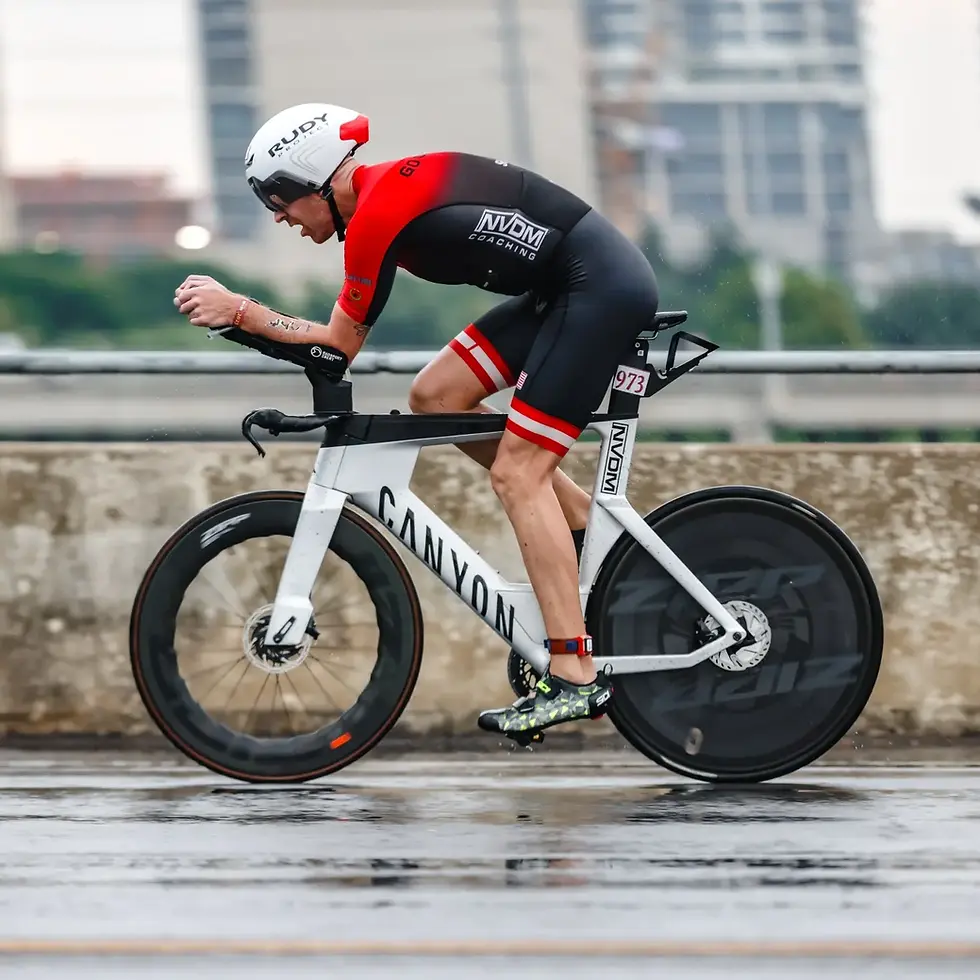
5. Stay Aero When It's Safe
Many athletes instinctively sit up the moment wind hits.
But sitting upright actually increases your surface area, making you more vulnerable to gusts. When possible:
Stay in aero position
Lower your head slightly
Keep shoulders narrow
The reduced frontal area often improves stability.
However, if control becomes compromised, it’s smarter to briefly move to the base bars for safety.
6. Be Cautious Around Other Riders
Wind gusts can push riders sideways unexpectedly.
When riding in races or group situations:
Leave extra lateral space
Avoid overlapping wheels
Expect sudden movements
This is especially important during triathlon races where many athletes have limited bike handling experience.
7. Adjust Your Wheel Choice for Windy Races
Equipment matters when wind conditions are extreme.
Many athletes assume deeper wheels are always faster, but handling stability is also important.
Consider:
Front wheel depth has the largest effect on handling
Rear disc wheels are often surprisingly stable
Mid-depth fronts (50–60 mm) can be easier to control than 80–90 mm in strong crosswinds
Professional bike fitters and aerodynamicists often note that front wheel choice has the biggest impact on rider confidence in wind.
8. Practice in Windy Conditions
Handling skills improve dramatically with exposure.

Instead of avoiding windy days, occasionally use them as specific skill sessions.
Practice:
Holding aero position through gusts
Smooth steering corrections
Relaxed upper body control
Confidence built in training translates directly to race performance.
9. Keep Power Steady
Wind can tempt athletes to surge power when fighting gusts or crosswinds.
Instead:
Maintain consistent power output
Focus on aero stability
Avoid wasting energy on sudden spikes
From a physiological perspective, steady pacing preserves glycogen and reduces muscular fatigue, which is critical for long-course events like Ironman or Ironman 70.3.
Final Takeaway
Wind is a skill factor in triathlon cycling—not just an environmental challenge.
Athletes who learn to stay relaxed, anticipate gusts, and maintain aerodynamic position often gain free speed simply because others lose confidence and sit up.
The goal isn’t to eliminate movement in the wind. The goal is to stay calm, controlled, and efficient while the bike moves naturally beneath you. Master that skill, and windy race days can become an advantage instead of a liability.
Handling wind, staying aero, and pacing the bike leg correctly are skills that can make or break your race. At NVDM Coaching, we help endurance athletes build the fitness and the technical skills needed to perform in real-world race conditions.
Whether you're preparing for your first 70.3 or chasing a PR at Ironman, personalized coaching can help you ride stronger and run better off the bike.