Your Best IRONMAN Marathon — Here's How Not to Blow It


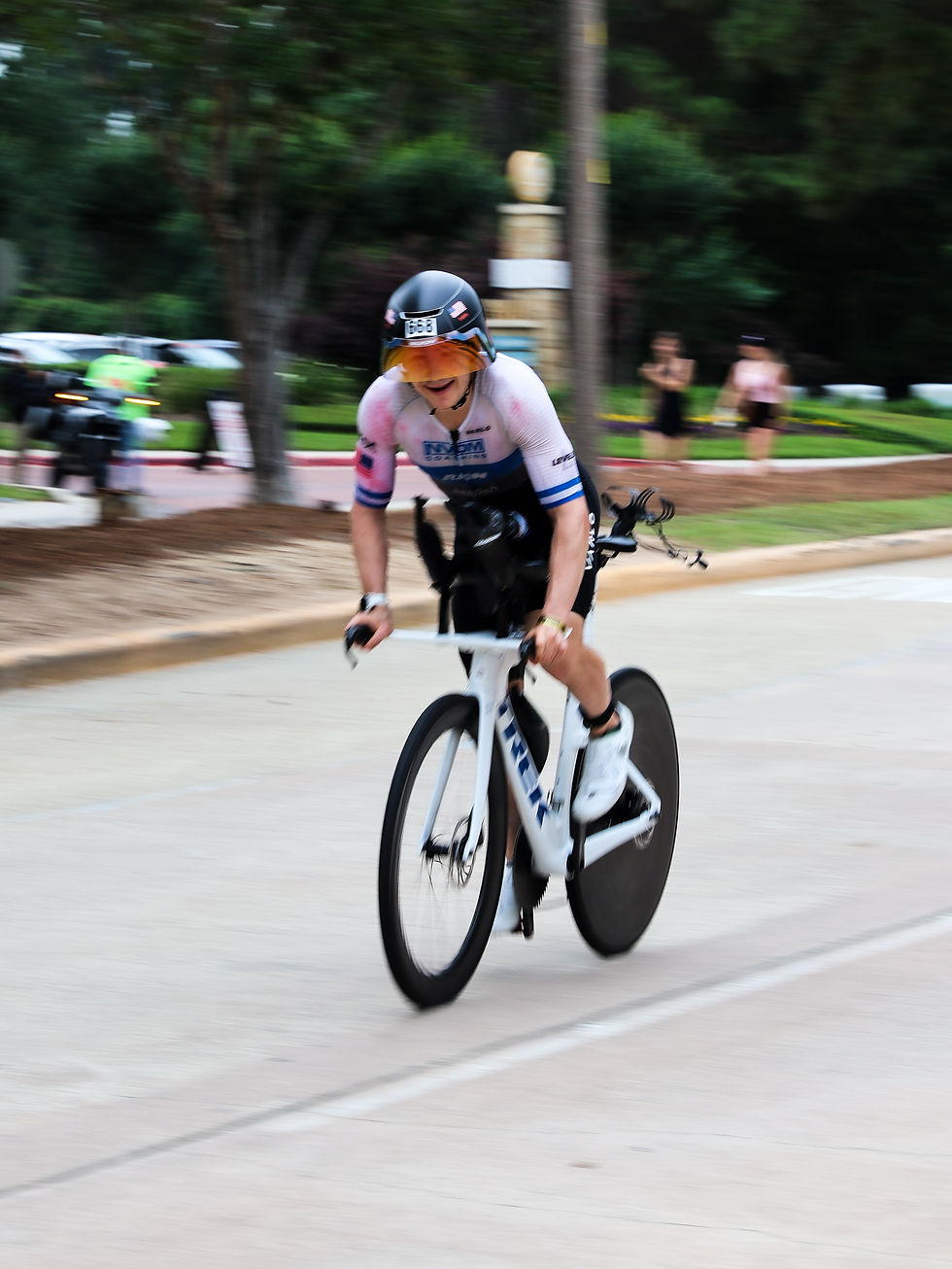
Most IRONMAN athletes spend their taper week visualizing the run. What they should be doing is revisiting their bike plan. Getting your IRONMAN marathon pacing strategy right doesn't start at T2 — it starts the moment you push out of transition on two wheels. Get the bike wrong — even by a little — and no amount of run fitness will save you.
This isn't a warning. It's a mechanism. And once you understand it, you'll never approach your IRONMAN marathon pacing strategy the same way.
Why Your Bike Split Decides Your Run
The link between bike output and run performance in IRONMAN racing isn't anecdotal — it's documented. Data from thousands of age-group finishers show a consistent pattern: athletes who exceed their target Intensity Factor on the bike by even 0.03–0.05 run materially slower than their training suggests they should. The margin between a smart bike and an overeager one isn't fitness. It's glycogen.
At full IRONMAN effort, you are simultaneously drawing from fat oxidation and glycolytic pathways. The bike sets the rate of glycogen depletion. Ride too hard for the first 60 minutes — which is almost guaranteed if you go by feel on race morning, surrounded by adrenaline and fresh legs — and you arrive at T2 in a physiological hole you cannot climb out of, no matter how well-trained your run legs are.
The most common race report sentence in IRONMAN history: "I felt great coming off the bike and then fell apart at mile 14."
That's not a run problem. That's a pacing problem that started on the bike.
Athlete Takeaway: Before race day, set a hard bike power ceiling — and make it 5 watts below your actual target for the first 30 minutes. What feels easy early is the correct output. The goal of the IRONMAN bike leg is to arrive at T2 with the capacity to run.
The First Mile Trap
The IRONMAN marathon run trap is well-established: athletes come off the bike feeling better than expected, start the run at or near goal pace, and hit a wall somewhere in the back half. Kona finishing data supports this. Athletes who run their first mile more than 20 seconds faster than average goal pace slow by approximately 5–7% in the second half of the marathon — a swing that can cost 30–45 minutes on a 4-hour marathon.
The physiology is straightforward. Exiting T2, you have elevated heart rate, residual cycling fatigue in the quads, and a hormonal cocktail that makes everything feel manageable. Your perceived effort is suppressed. Go by feel in the first mile and you will run too fast.
The rule: your first mile should be 30–45 seconds per mile slower than your goal marathon pace. Yes, that slow. If your goal is 9:00/mile, start at 9:30–9:45. What you're doing in miles 1–3 is not running — it's negotiating with your body's fatigue debt. Let it settle. The race doesn't start until mile 14.
Finishing data from long-course athletes consistently shows that those who start the marathon more than 20 seconds per mile faster than goal average pace slow significantly in the back half. The magnitude varies by athlete and conditions, but the pattern is reliable: overage early → suffering late. (If citing a specific dataset for Wix publication, verify against your TrainingPeaks race analytics or IRONMAN athlete database.)
Athlete Takeaway: Set a first-mile pace alert on your watch and treat it as a hard ceiling. The ego hit of seeing a 9:45 in mile one is nothing compared to the grind of walking miles 20–26.
What IRONMAN Marathon Pacing Actually Looks Like
Pacing by Feel vs. Pacing by Data
Heart rate in IRONMAN racing is unreliable as a primary pacing tool because cardiac drift — the progressive elevation of HR at a given pace due to dehydration, heat, and cumulative fatigue — makes your zones increasingly dishonest as the day progresses. At hour 8 of racing, a heart rate that says "Zone 3" may represent an effort you won't sustain for another two hours.
Running pace off the bike, conversely, is honest. If you've set realistic targets based on your training data and recent race performances, pace is the most trustworthy signal you have.
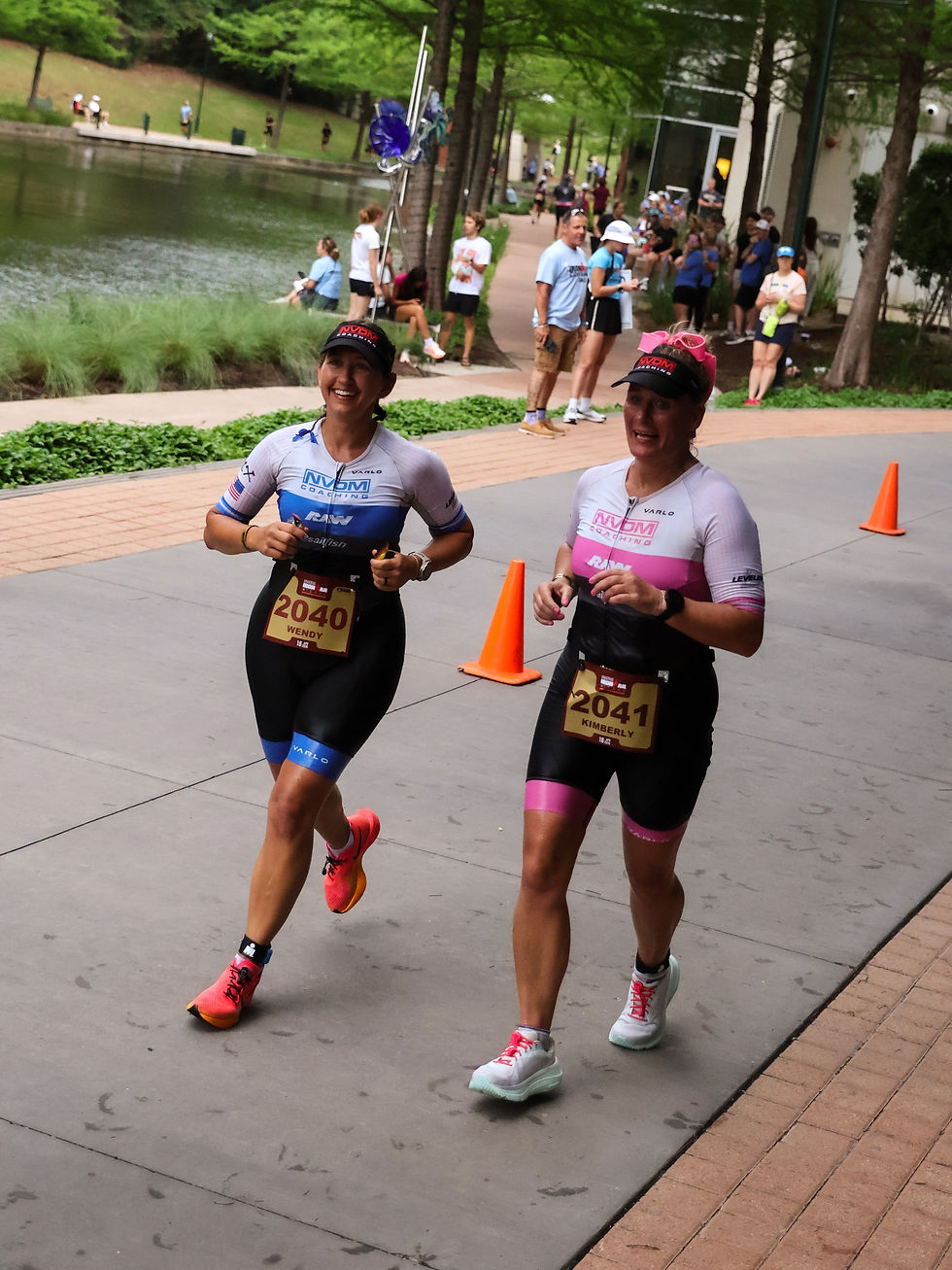
NVDM Coaching target pacing structure for IRONMAN marathon:
Miles 1–3: Goal pace +35–45 seconds (controlled settling period)
Miles 4–13: Goal pace ±10 seconds (build to goal, hold)
Miles 14–20: Goal pace or as close as possible
Miles 21–26.2: Whatever you have left — controlled aggression
The Walk/Run Decision
Walking in an IRONMAN is not failure. It's a tool. The athletes who fight the walk — who white-knuckle through mile 18 trying to maintain form — often end up walking miles 20–26 anyway, just more slowly and painfully.
Strategic walking at aid stations is biomechanically neutral: it recovers your calves, allows you to fuel and hydrate properly, and in hot conditions, reduces core temperature. Research from IRONMAN World Championship analysis suggests that athletes who implement brief 30–60 second walks at every aid station through mile 18 run the back half of the marathon faster on average than those who resist walking entirely.
The calculus: a 45-second walk every mile costs you roughly 45 seconds. Falling apart at mile 20 costs you 20–40 minutes.
Athlete Takeaway: Make the walk/run decision before the race, not during it. Choose your aid station strategy in advance so you're executing a plan, not reacting to pain.
Your IRONMAN Marathon Pacing Strategy Starts Before Race Day: Setting Run Targets
The biggest pacing mistake you can make is showing up on race day without a specific target pace — and "running by feel" instead. In an IRONMAN, feel is a liar.
Here is a simple pre-race target framework:
Start with your standalone marathon pace. Take your current estimated open marathon time and adjust it: add 15–20 minutes for a full IRONMAN, 8–12 minutes for a 70.3. This is not accounting for fitness — it's accounting for cumulative fatigue and the physiological cost of 4–5 hours of prior effort.
Validate against your longest training brick. If your long brick runs consistently show a 10:15/mile average at conversational effort after 4+ hours of training, your race plan should not target 9:45. Let your brick data speak louder than your ambition.
Factor in course and conditions. Elevation, heat, and humidity each require pace adjustments. A hilly IRONMAN run on a 90°F day is not the same as a flat course in mild conditions. Reduce your target pace by 15–30 seconds per mile for every significant environmental stressor.
Athlete Takeaway: Build a three-tier pace plan: goal pace, conservative fallback, and survival mode. Know all three before the gun goes off. Racing without a written plan is training, not racing.
When the Race Falls Apart
Every long-course athlete has experienced it. You hit mile 17 and the wheels come off. Here's the framework for recovering rather than unraveling:
Step 1: Fuel immediately. The most common cause of mid-marathon deterioration is caloric depletion. Take in 40–60g of fast carbohydrates at the next aid station, even if you don't feel hungry. Hunger at race pace is a lagging indicator — by the time you feel it, you're already in deficit.
Step 2: Shorten your horizon. Stop thinking about mile 26. Think about the next aid station. Then the one after that. Cognitive narrowing reduces the psychological weight of remaining distance.
Step 3: Slow down deliberately. This sounds counterintuitive, but a controlled 30-second pace reduction is faster over 9 miles than a bonk-induced shuffle. Drop the pace, recover slightly, and see if you can reestablish rhythm.
Step 4: Walk with purpose. If walking is the call, walk fast and with posture. Athletes who shuffle-walk leak time and momentum. Power-walking at 15:00/mile is not as slow as it feels, and it's far faster than a cramped, hunched-over crawl.
The Bottom Line
The IRONMAN marathon is won or lost before you ever lace up your running shoes. Pacing discipline on the bike, a conservative first mile, a pre-written run plan, and smart use of every aid station aren't tactics — they're the race. The fitness is already in your legs. Your job on race day is to let it out intelligently.
Slower first half. Patient middle. Whatever you've got for the back half.
That's how you run your best IRONMAN marathon.
Want a training plan built around your specific race targets — with brick pacing benchmarks included? NVDM's coaching plans are built for athletes who race with intention. Explore your options here.


