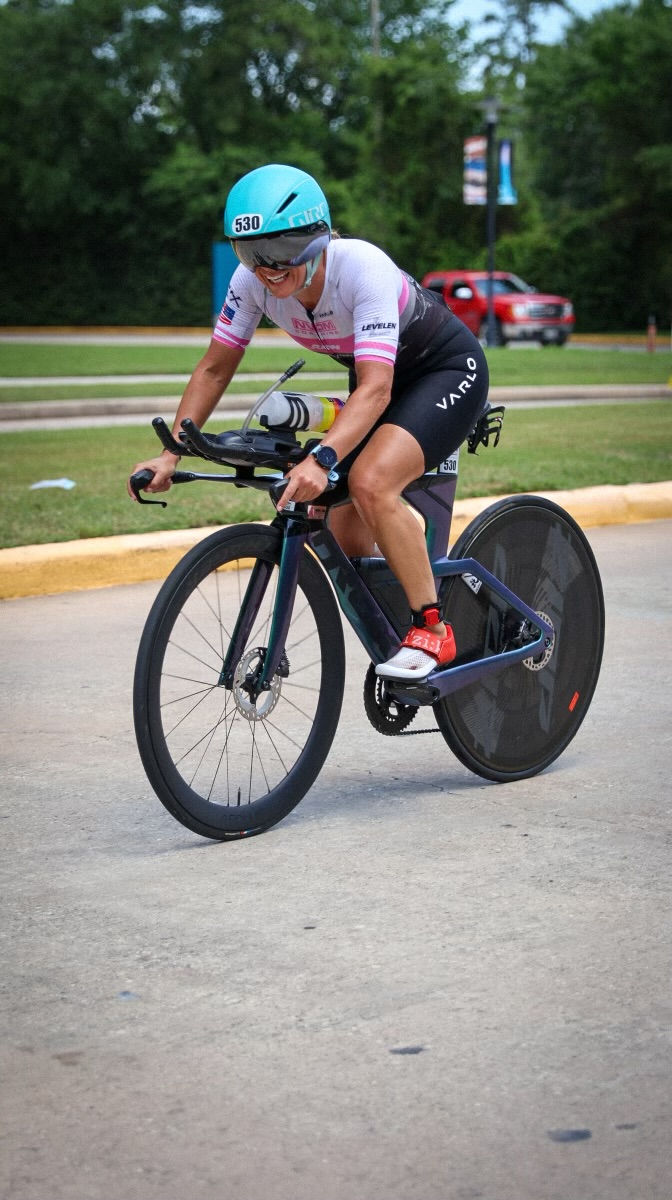
IRONMAN 70.3 New York Weather: A Race-Weekend Plan for Wind, Rain, and Cool Temperatures


The National Weather Service forecast for Jones Beach on Saturday reads: north winds 20 to 25 mph with gusts to 40, a high in the mid-60s, a chance of showers in the morning and showers likely in the afternoon. A coastal storm is passing southeast of Long Island this weekend, and for this year's IRONMAN 70.3 New York, the weather is part of the race. You can plan for every piece of it, and a clear plan turns wind and rain into conditions you already know how to handle.
Jones Beach has hosted this race through weather before. In 2023, the event's first year, the swim was shortened as the remnants of Tropical Storm Ophelia moved up the coast, and in 2024 athletes raced the full distance in rain and wind. Here is the plan in the order you will live it: Friday check-in, the night your bike spends in transition, race morning, each leg of the race, and the finish.
The IRONMAN 70.3 New York Weather Forecast for Race Weekend
This is the forecast as of Thursday morning, September 24, matched to the race schedule. The numbers will move as the storm's track firms up, so check the latest before you leave for the venue each day.
When | On the race schedule | NWS forecast, southern Nassau County |
Friday | Mandatory bike check-in, 10 AM to 7:30 PM. Athlete briefings at noon, 2 PM, and 5:30 PM. | Highs in the upper 60s. North winds 15–25 mph, gusts to 35. 40% chance of showers, mainly in the afternoon. |
Friday night | Bikes racked overnight in transition. | Lows in the upper 50s. North winds 20–25 mph, gusts to 40. 50% chance of showers. |
Saturday | Transition open 5:30 to 7 AM. Age-group rolling start at 7 AM. | Highs in the mid-60s. North winds 20–25 mph, gusts to 40. Chance of showers in the morning, likely in the afternoon (70%). |
Over the water, winds run stronger. The marine forecast for the South Shore bays calls for north winds of 25 to 30 knots (about 29 to 35 mph) on Saturday, with gusts to 45 knots.
A coastal flood watch runs from Friday evening through Saturday morning. High tides at the nearest south-shore gauges come around 8 PM Friday and 8 to 9 AM Saturday, and the NWS lists roads and parking lots near the waterfront among the vulnerable areas.
The forecast is still settling. In its Wednesday discussion, the NWS office in Upton noted that winds could run up to 10 knots higher than forecast if the storm tracks closer to the coast.
Race management makes any course decisions, working with lifeguards, officials, and forecasters on site. The athlete guide says the briefings will cover any changes "due to weather related forecasts," and the IRONMAN Tracker app sends updates for course and event changes.
Athlete TakeawayAttend a Friday briefing, turn on IRONMAN Tracker notifications, and check the NWS forecast for Jones Beach Friday evening and again Saturday morning. Build your final plan on the latest numbers.

Friday Bike Check-In: Cover the Saddle and Bars Only
Every bike has to be racked by 7:30 PM Friday and stays in transition overnight. Winds build through Friday afternoon and the evening high tide arrives around 8 PM, so check in earlier in the window rather than at the close, when racking and walking your route from swim exit to bike are easier. If the lifeguard-supervised pre-event swim runs (noon to 4 PM, at your own risk) and the conditions suit you, ten easy minutes will show you the chop and your sighting landmarks.
Should you cover your bike overnight?
The athlete guide answers this directly: "athletes will be allowed to cover their seats and handlebars only from inclement weather. Full bike covers ARE NOT ALLOWED as it presents a safety hazard to volunteers and other competitors. Full bike covers will be removed from any bikes left in transition once Bike Check-In is over."
With 40 mph gusts in the forecast, the reason is easy to picture: a full cover catches wind like a sail and pulls on the bike, the rack, and the bikes beside it. A snug cover over the saddle and cockpit keeps the padding in your saddle and armrests from soaking up a night of rain without giving the wind much to push on.
Saddle: a plastic bag or shower cap pulled tight and taped or tied underneath.
Cockpit: a bag over the aerobars and armrest pads, secured at both ends.
Nothing loose: flapping plastic tears or blows into the next rack, so pack tape or zip ties.
Take home your bike computer, nutrition, and any bottles you plan to fill fresh.
Electronic shifting is built for rain. SRAM rates its AXS system waterproof to the IPX7 standard, and Shimano describes Di2 as "completely waterproof and sealed from the elements."
Overnight rain washes lube off the chain and cooler air lowers tire pressure, so bring a floor pump, wet-weather chain lube, and a rag on race morning. SILCA's rule of thumb is to "lower your tire pressure by 10% if you are going to be riding in the rain." If you already have a pressure you have tested on wet roads, use that.
Athlete TakeawayCheck in your bike earlier on Friday, cover only the saddle and cockpit with plastic tied down tight, and take your computer and bottles home. Pack a pump, wet lube, and a rag for race morning.
Race Morning at Jones Beach: Leave Early and Stay Warm
Parking opens at 4:30 AM, transition is open from 5:30 to 7 AM, and the rolling start begins at 7 AM. With the coastal flood watch running through Saturday morning, allow extra time on the drive in and watch the Tracker app for parking or access updates. Sunrise is around 6:45 AM, and under heavy cloud the early bike will be dim, so clear or low-light lenses beat dark sunglasses.
There is no warm-up swim on race morning, so staying warm becomes part of your warm-up. Keep warm clothes on as long as you can, then warm up on land with band work, arm swings, and easy jogging. Your wetsuit is a warm layer too, so put it on early. Your gear bag stays at your rack, and clothing can be discarded only at aid stations or designated disposal points, so ask at the briefing about a morning-clothes drop near the swim start, or have a friend hold your layers.
In T1, put each item in its own plastic or zip-top bag (socks, run shoes, bike layer, a small towel) so it stays dry until you open it. Our guide to faster transitions covers the rest of the setup, and if this is your first 70.3, what to expect on race day walks through the full day.
Athlete TakeawayArrive early, stay in warm clothes until you head to the swim, and warm up on land with your wetsuit on. Bag every item at your rack so it is dry when you reach it.

The Swim in Zach's Bay: Plan for Chop
Zach's Bay is sheltered from the ocean surf, but a strong north wind still raises chop there. Athletes described choppy water in both 2023 and 2024, and in 2024 swimmers were told to expect to swim "uphill" on the way out and get an assist on the way back. Saturday's marine forecast calls for waves around 2 feet in the bays.
Water temperature should not be a concern. Satellite-based readings put the ocean off Jones Beach around 70°F on September 23, inside the wetsuit-legal range of 60.8°F to 76.1°F. The official reading is taken on race morning. If you run cold, a neoprene cap is allowed in a wetsuit-legal swim as long as the race cap goes on the outside.
Sight more often, and time it: lift your eyes as you rise on a wave.
Breathe away from the chop, switching sides as the course turns.
Shorten your stroke slightly and raise your turnover; a steady rhythm keeps you moving where a long glide stalls.
Seed yourself honestly in the rolling start.
Our guides to sighting in open water and open water swim anxiety go deeper. If officials change the swim format on race morning, follow their instructions and lengthen your land warm-up, since you will reach the bike sooner and with less time to warm up in the water.
Athlete TakeawayPlan for chop: sight from the top of the waves, breathe away from the rough side, and hold a steady rhythm. If the swim changes, lengthen your land warm-up and keep the rest of your plan.
T1 and Layering: Dress for the Middle of the Bike
For most athletes, the first half hour after the swim is the coldest part of the day: wet skin, a north wind, and your own riding speed on top of it. You won't find a useful wind-chill number for Saturday, since the NWS defines wind chill "only for temperatures at or below 50°F and wind speeds above 3 mph." In the upper 50s and 60s, the chill comes from moving air pulling heat off wet skin, and leaner athletes and those with longer bike splits feel it most.
Staying warm also protects your fueling. In a 1996 National Academies volume on nutrition in cold environments, physiologist Ira Jacobs wrote that shivering can produce "a four- or fivefold increase in metabolic rate," and that "the relative increase in the rate of substrate oxidation caused by shivering is greatest for carbohydrates." Racing keeps most athletes too warm to shiver, but it can start during a long T1, a slow aid-station stop, or a mechanical.
Choose your layers for how you will feel at mile 40 with wet skin. Ranked by warmth for the time they take in T1:
A wind vest. It blocks wind across your torso, packs small, and a front zip lets you vent it.
Arm warmers. Slow to pull over wet skin. Roll each one into a ring beforehand so it slides on in one motion, or skip them if you haven't practiced.
Thin gloves. Worth it if your hands go numb on cool, wet training rides, but only if you have rehearsed putting them on wet.
A rain jacket. Usually too warm once you are working hard in the mid-60s, and it flaps in a crosswind. Save it for athletes who run very cold.

A simple rule of thumb: if you expect to ride longer than about three hours, or you know you run cold, start the bike in a vest. You can unzip it anytime and drop it at a bike aid station (every 12 to 15 miles) if you overheat. Aid stations are the only places you can discard clothing, and no one can hand you a layer on course. The guide also rules out a full change in T1, since public nudity is not permitted, so plan layers that go on over your trisuit. Once you are rolling, spin an easy gear for a few minutes to build heat and start fueling early.
Athlete TakeawayLay out a wind vest in T1, plus arm warmers if you have practiced with them, and decide before race morning whether it goes on. A bike split over about three hours, or a history of running cold, means wear it.
Riding the Wantagh Parkway in a North Wind
The bike is two laps on closed roads. Each lap goes north on the Wantagh Parkway to Old Country Road, back south toward Jones Beach, then west on the Bay Parkway to a turnaround and back east. With a north wind, that gives you a headwind going north, a tailwind coming south, and a crosswind on the Bay Parkway. Athletes in 2024 reported the strongest crosswinds on the open stretches and bridges near the beach.
Pace by power or effort, not speed
Your speed will be lopsided, and that is expected. Hold your effort in a narrow band, riding slightly harder into the headwind and slightly easier with the tailwind. In a lab study by Atkinson and Brunskill (Ergonomics, 2000), seven cyclists rode a simulated 16.1 km time trial with headwind and tailwind sections. Riding at 5% above average power into the headwind and backing off with the tailwind was about 12 seconds faster than self-paced riding, compared with 10 seconds for constant power, with the lowest perceived exertion of the three strategies. It was a small study of a short effort, so apply it modestly: a few percent more going north, a few percent less coming south, and no surges. Our bike pacing and power guide covers setting the targets.
Handling gusts and crosswinds
In wind-tunnel testing by Barry and colleagues (Procedia Engineering, 2012), side force at 15° of yaw was roughly double the drag force for every wheel type tested, and with disc wheels front and rear, the roll moment at 10° of yaw would require an average-sized rider to lean about 15° to balance it. On Saturday:
Choose a shallower front wheel if you have the option. The front wheel steers the bike, so you feel crosswinds there first. Many riders manage a rear disc well, but lighter or less confident riders should consider a spoked rear. Listen at the briefing for any equipment announcements.
Stay aero where you feel in control, and come up to the base bar with your hands near the brakes on exposed bridges and when gusts hit.
Relax your grip and elbows and look ahead. Our article on riding a TT bike in the wind covers the technique.
Give extra room when passing. The draft zone is 12 meters and you have 25 seconds to pass, and passes take longer into a headwind, so commit early or settle in at a legal distance.
Each lap has two U-turns, at Old Country Road and on the Bay Parkway. Painted lines and expansion joints get slick in the rain, and a 2024 racer described "a tricky 2-mile stretch of concrete with expansion joints." Brake earlier and more gently, and take U-turns slowly and upright. SILCA notes that rim brakes need "at least a full revolution" of the wheel to clear water before they grip well.
Fueling in cool, wet conditions
Your carbohydrate needs stay the same in the cold, so keep working toward the 80 to 120 grams per hour you trained for. You will sweat less and probably drink less, so if your bottles normally carry much of your carbohydrate, shift more of it into gels, a gel flask, or a concentrated bottle, which are also easier to manage with cold fingers. Eat and drink on the southbound tailwind stretch, where the bike is most stable. Hold wrappers until an aid station, since littering is a 2-minute blue card and the wind will carry anything you drop. See our 70.3 nutrition plan for the hour-by-hour structure.
Headwinds slow the whole field, so if you expect a long day, know the cut-offs. You have 5 hours and 30 minutes from your swim start to finish the bike, with checkpoints at the end of lap 1 (mile 28) by 12:00 PM and at Aid Station 3 (mile 40) by 1:00 PM.
Athlete TakeawayRide a few percent harder going north and easier coming south, use the base bar on exposed bridges when gusts hit, fuel on the tailwind stretch, and take every U-turn slowly and upright.

The Run on the Jones Beach Boardwalk
The run is two laps: through the tunnel under Ocean Parkway, west on the boardwalk to a U-turn at West End Field 1, around the West End Bathhouse, and back east to transition. Aid stations come about every mile. With a north-to-northeast wind, the eastbound return will likely be the harder direction, and runners in 2024 described a strong headwind on the return leg. Run that stretch by effort or heart rate, and if someone is holding your pace into the wind, running a step behind them is legal and helps.
The mid-60s are comfortable running weather, so most athletes will shed the vest in T2. If you keep a layer on, your bib must be worn on the front and "clearly visible at all times during the run course," so put your race belt over the top. For the first mile off the bike, see our piece on running off the bike.
Dry socks in a bag in T2 make the first miles more comfortable.
Anti-chafe on your feet and seams, since wet fabric rubs more.
Shorter strides through turns, the U-turn, and the tunnel ramps, where wet surfaces have less grip.
A snug cap keeps rain out of your eyes without blowing away.
Athlete TakeawayRun the eastbound return of each lap by effort rather than pace, wear your bib on the outside of any layer, and put on dry socks in T2. The run's one intermediate cut-off is the end of lap 1 (mile 7) by 3:30 PM.
After the Finish: Get Warm First
You will cool quickly once you stop moving in wet clothes and wind. Bike and gear check-out doesn't open until 1:30 PM, so earlier finishers can't reach their gear bag right away. Plan for a dry layer at the finish, either with a friend or in your car. Post-race athlete food runs from 11 AM to 5 PM at the East Bath House.
Athlete TakeawayPut a dry, warm layer where you can reach it within minutes of finishing.
The Bottom Line on IRONMAN 70.3 New York Weather
Everyone on the start line races the same wind. The athletes who have their best day will be the ones who made their decisions ahead of time: bike checked in early with the saddle and cockpit covered, a warm race morning, a vest decision made before T1, a little more effort going north and a little less coming south, and a dry layer waiting at the finish.
Set your goal for Saturday by effort and execution. A split that would be ordinary on a calm day can be an excellent ride in a 20 mph north wind, and your effort and placing will show how well you raced. Race day is the celebration of the training you have already done, and we are cheering for everyone lining up at Jones Beach this weekend.
If you want a coach in your corner for days like this one, someone who builds your race plan with you and helps you adjust when the forecast changes, that is the work our coaches do every week. Set up a call with us now, and we will help you be ready for your best race day!